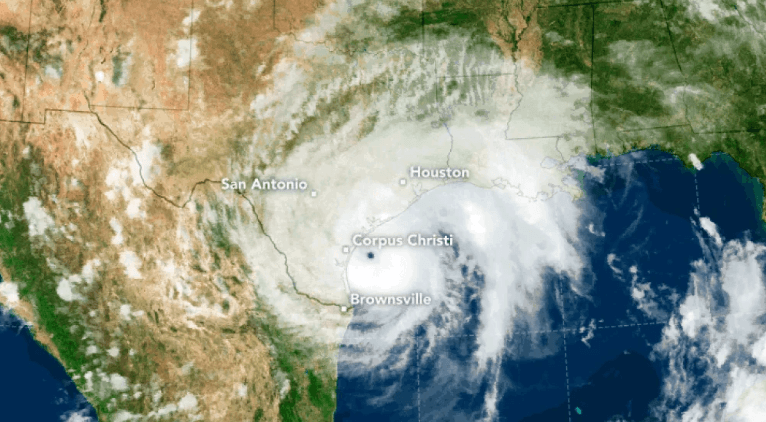
If you own a retail center or an office building anywhere in the greater Houston area — from Kingwood and Humble down to League City, Missouri City, and the coastal stretches — hurricane season is not optional reading. The Atlantic hurricane season officially runs from June 1 through November 30, and the peak for the Texas Gulf Coast falls in mid-August through late September.
Harvey, Ike, and Beryl made one thing clear for commercial owners: the properties that come back online first are the ones whose owners prepped in May. The ones that did not spend the first week after landfall on hold with out-of-state contractors while their tenants' revenue — and their own rent — sits at zero.
This is the playbook we run on every retail and office property under Olivewood management. It is written for owners, not homeowners: rooftop HVAC units, storefront glazing, parking-lot drainage, NNN leases, and business-interruption coverage are the things that decide how a commercial asset gets through a storm.
Start With the Flood Zone, Not the Shutters
Before you fix anything, know what you are protecting against. FEMA's Flood Map Service Center gives you the official flood zone for any address. A retail pad in an AE zone and an office building in an X zone need different plans, different coverage, and different tenant notices.
Action items:
- Pull the current FEMA flood map for every parcel and file it with the insurance binder
- Confirm the commercial flood policy is active and the limit reflects replacement cost, not the number you bought the building for
- Photograph and date-stamp the pre-season condition of the roof, the parking lot, every storefront, and the mechanical yard
The Pre-Season Inspection for Commercial Buildings
We walk every managed property in late May. A residential checklist does not translate — the failure points on a strip center or an office building are different.
Roof and rooftop equipment:
- Inspect membrane seams, flashings, and penetrations on TPO, modified-bitumen, and metal roofs — wind gets under a lifted seam and peels the field
- Confirm rooftop HVAC units are strapped or curbed to spec; a loose 5-ton unit is a 900-pound projectile
- Clear every roof drain, scupper, and overflow; a blocked drain turns a flat roof into a pond and a pond into a collapse
- Check parapet caps and coping for loose fasteners
Storefronts, glazing, and signage:
- Inspect storefront frames, mullions, and door closers; confirm which suites have impact glazing and which do not
- Decide now who boards up — the lease usually says the tenant is responsible for the storefront, but the owner is responsible for the shell, and the gap between those two sentences is where damage happens
- Check pylon and monument signs, canopy fascia, and awnings for loose panels
- Secure or remove dumpster enclosure gates, cart corrals, patio furniture, and planters
Site drainage and parking:
- Clear storm inlets, area drains, and detention pond outfalls; verify the grading still moves water off the lot and away from the slab
- Test any lift stations and sump pumps under load
- Document the location of every utility shutoff — gas, water, and the electrical main — and confirm the facilities team can reach them
Life-safety systems:
- Test emergency lighting and exit signs, because the power will go out and the fire marshal will still expect them to work
- Confirm the fire alarm panel has a charged battery and a working dialer, and that the sprinkler riser is accessible
- Bring the life-safety inspection forward if it is due in the fall
Get Your Commercial Tenants on the Same Page
A commercial tenant who does not know the protocol will improvise, and improvisation on a storefront costs money. Send a written hurricane notice to every tenant by June 1 that covers:
- What the tenant is responsible for under the lease (contents, storefront, signage inside the lease line) and what the owner covers (shell, roof, common areas, site)
- Where the utility shutoffs are and who is authorized to operate them
- Your emergency contact number and after-hours protocol
- A reminder that the tenant's contents and business-interruption coverage are the tenant's policies, not the owner's
- When and how the property will be closed, secured, and reopened
Document that you sent it. When a claim or a lease dispute comes up later, written evidence that you communicated the procedure matters. This is a core part of tenant relations and lease administration, not an afterthought.
Build Your Vendor Bench Before You Need It
The single biggest mistake Houston commercial owners make is waiting until after landfall to figure out who will do the roof. Every roofer, water-mitigation crew, and electrical contractor in the metro is booked within hours, and the ones who answer the phone are often storm chasers with no local license and no track record.
This is where an integrated operation changes the math. Our sister company, MSM Services Texas, handles emergency post-storm response for the properties we manage — water extraction, debris removal, board-ups, roof tarping, and the post-construction cleaning that has to happen before a tenant can reopen. Because they are on call for our portfolio, we are not scrambling to find them when the lines go down.
If you self-manage, build your own bench now: a commercial roofer who works on membrane roofs, a water-mitigation company, an electrical contractor, a glazing company, and a general contractor — all local, all insured, all on a signed rate sheet before June 1.
Insurance and Documentation
Two things to do before the season opens, both of which take less than an afternoon:
- Photo and video walkthrough. Shoot every suite, every elevation, the roof and every rooftop unit, the parking lot, and the mechanical rooms. Save it to cloud storage with the date stamp intact. This is the difference between a clean claim and a six-month fight with an adjuster.
- Policy review. Confirm your named-storm or wind/hail deductible — on commercial policies it is usually a percentage of insured value, and 2% of a $6 million building is $120,000 out of pocket. Confirm loss-of-rents or business-income coverage on your side, and confirm flood is a separate policy. The National Flood Insurance Program has a 30-day waiting period, so a policy bound in August does not help you in August.
A Beryl Story From League City
In July 2024 we were managing a 22,400 SF strip center in League City — eight suites on NNN leases, 88% occupied, a nail salon and a restaurant on the end caps. It had been walked in May. Two roof-drain strainers were replaced, a lifted membrane seam over Suite 6 was heat-welded, and the pylon sign panels were re-fastened. Total pre-season spend: about $3,400.
Beryl came ashore on July 8. The center lost power for 41 hours and a section of canopy fascia. The roof held. MSM had a crew on-site the morning of July 9 to clear the lot, remove the fascia debris, and re-secure the dumpster gates. Seven of eight tenants reopened on July 10; the restaurant reopened July 11 after its walk-in was checked.
A comparable center two miles away that had not been walked lost membrane over three suites through that same seam-lift failure. Water got into the ceilings, mold started before the mitigation crew arrived on day five, and two tenants were out for eleven weeks. The owner's out-of-pocket after the deductible was north of $60,000, and one tenant used the closure to negotiate out of its lease. The $3,400 in May was the cheapest money either owner spent that year.
When a Storm Is Actually in the Gulf
Once the National Hurricane Center has a system in the Gulf with a track that includes Texas, you have roughly 72 to 96 hours:
- Send the storm notice to tenants in writing with the closure timeline and emergency contacts
- Secure or remove every loose exterior item; drop awnings and canopy panels if they are designed for it
- Board or film storefronts per the lease responsibility you settled in May
- Top off generator fuel and test the transfer switch
- Photograph the pre-storm condition one more time
- Confirm vendors are on standby and know the property address and the roof access
- If evacuation orders are issued, communicate them and document that you did
After the Storm
The first 48 hours are when the most expensive mistakes happen. Do not let tenants re-enter until the shell is confirmed safe — gas, structural, electrical. Get a water-mitigation crew on-site within 24 to 48 hours of any intrusion; mold starts within 72 hours, and a delayed response turns a $5,000 dry-out into a $40,000 remediation.
Inspect the roof and every rooftop unit before the HVAC is restarted. Document every call, photo, and invoice — the carrier wants it, and so does the CAM reconciliation, because storm cleanup on common areas is usually a recoverable expense under an NNN lease and unrecoverable if it is not itemized. If you are not sure how that reconciliation should read, start with our CAM reconciliation guide.
Why Olivewood Is the Right Partner for Hurricane Season
Three structural advantages matter when the wind picks up:
- In-house maintenance with a disaster-response arm. Our own team handles the pre-season inspection and facilities maintenance program, and MSM Services Texas handles the physical response after landfall. One call, one accountable party, no bidding war on day two.
- Commercial lease administration built for this. We know which side of the lease line each responsibility sits on, we send the tenant notices, and we document them — so the tenant coordination during reopening goes by the lease, not by argument.
- A documented playbook and a photo record for every asset. The walkthrough, the vendor rate sheets, and the insurance binder are on file before June 1, which is what turns a claim into a check instead of a dispute.
If you own a retail center or office building in the Houston area and your current manager disappears when the forecast turns, the cost of that is not abstract — it is weeks of lost rent, a mold claim, and a tenant looking for the exit. Schedule a free, no-obligation consultation and we will walk your property, build the hurricane checklist, and put the right crews on standby before the next storm is on the radar. Or start with our overview of commercial property management in Houston.
Ready to talk about your property?
Schedule a consultation with the Olivewood team — we'll come prepared.
Schedule a ConsultationRelated Reading
The Puddle Behind Your Building: Why Site Drainage Is a Capital Risk, Not a Housekeeping Problem
Why In-House Maintenance Beats Outsourcing for Commercial Assets